

Support the Next 100 Years >

A New Chapter for the Kabirizi Lineage
For more than a century, Virunga National Park has been a stronghold for one of the world’s most remarkable great ape populations. Throughout this period, the Park has witnessed profound changes in the social structures of its mountain gorilla families, with their histories unfolding over decades of fastidious monitoring. The story of the Kabirizi family is among the most emblematic, reflecting the resilience of the species and the adaptive conservation work that has defined Virunga since its earliest days.
Tracing its origins to the Zunguruka family, the Kabirizi family was first habituated in Bukima in 1994. Leadership passed through several silverbacks over the years – Zunguruka, Ndungutse, and Buhanga – before Kabirizi assumed control following a series of violent encounters with neighbouring groups. Over the decades that followed, the family grew from 14 individuals in 1998 to a peak of 36 by 2012, before a notable split in 2013 when Bageni, one of Kabirizi’s offspring, left to establish his own family.
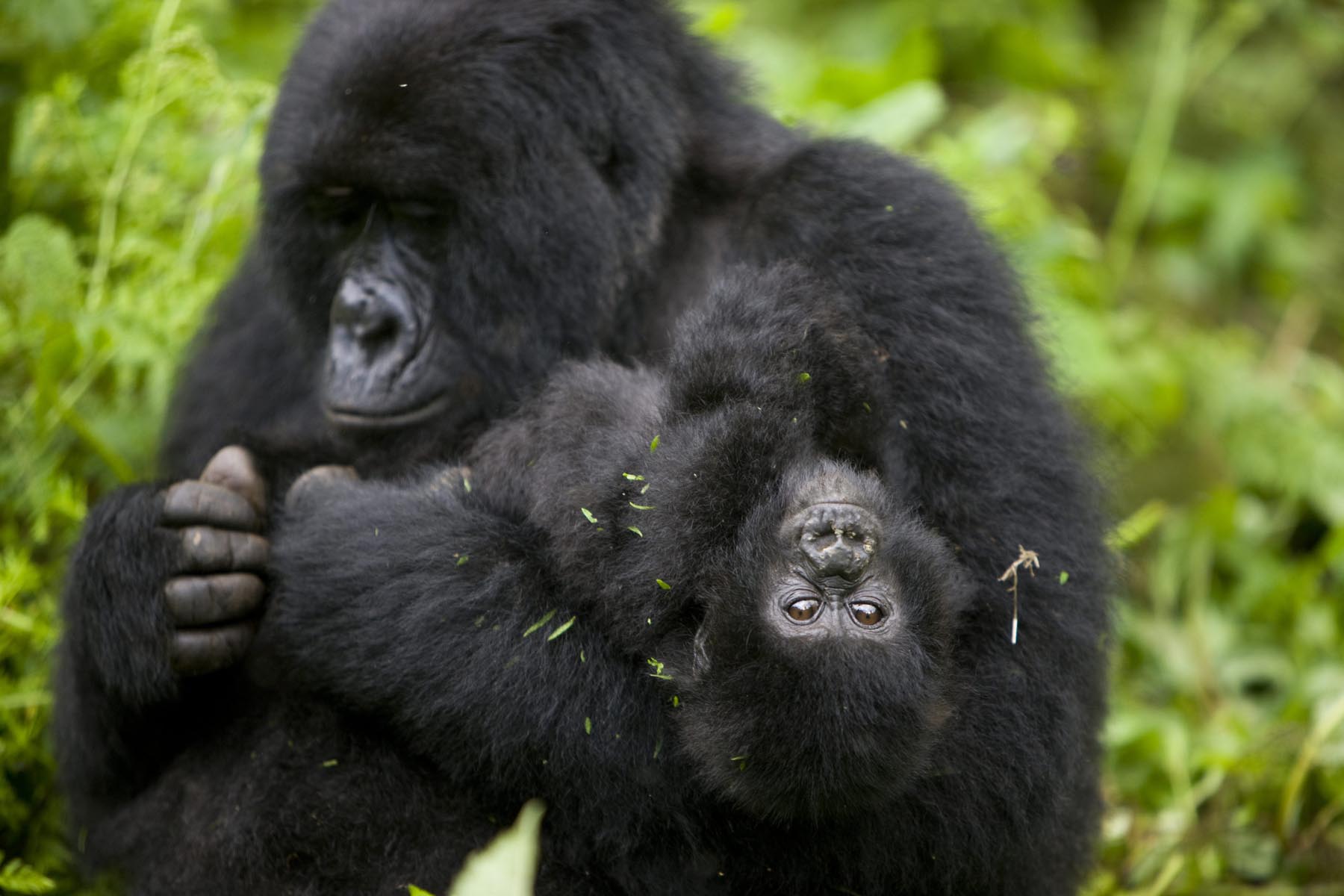
(Sighting of new mountain gorilla babies in the Kabirizi family, 25 November 2008. Photo by Brent Stirton)
This year, trackers in the Mikeno sector observed another major shift in the family’s timeline. On 28 August 2025, during routine monitoring patrols, a faction was found to have splintered from the Kabirizi group inside the Bukima area. The split followed increasing leadership tensions within the group: Kabirizi, leading the troop at an advanced age, was no longer able to maintain authority over the seven other silverbacks. His son Masibo – a mature silverback with rising social standing – clashed with Kabirizi, before leaving to form his own family.
In the weeks that followed, the two groups moved across different areas of the sector, with Kabirizi leading his entourage towards Gatovu. A brief reunion occurred on 17th October 2025 when both groups were seen interacting in Bukima, prompting the possibility of a reunification. These suspicions were quickly allayed the next day, with both parties going their separate ways and confirming the permanent formation of two distinct families.
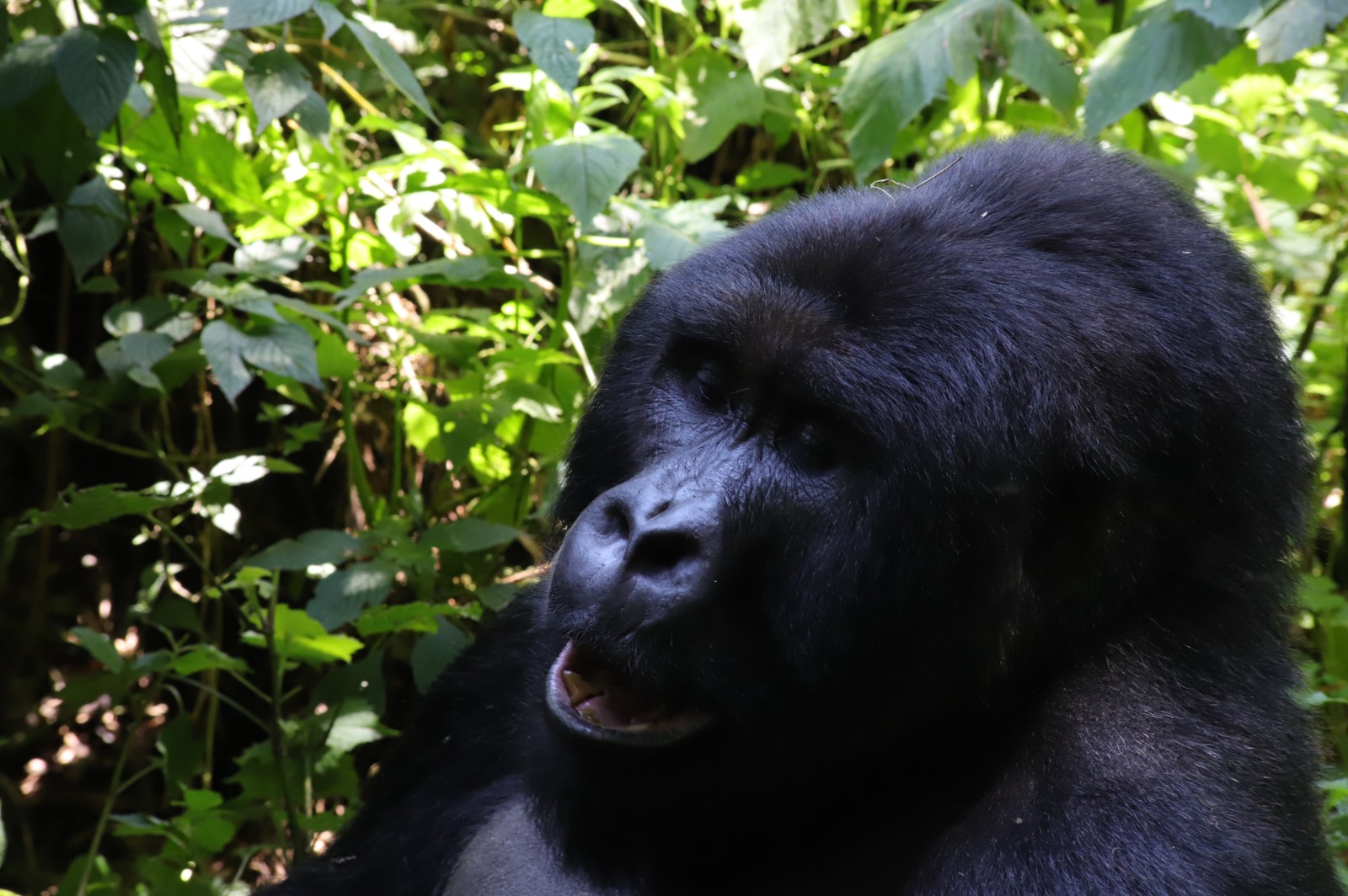
(Silverback Masibo, 2025. Photo by Virunga National Park)
A detailed monitoring mission, conducted by community trackers from 20th October to 23rd October 2025, provided a clearer picture of the newly formed groups. Masibo’s unit was identified as having 14 individuals, including four silverbacks and a young female, Mvunabandi, who recently immigrated from the Nyakamwe family. Verification within the Nyakamwe family confirmed Mvunabandi’s emigration. Kabirizi’s group was observed with a total of 12 gorillas, three of them silverbacks.
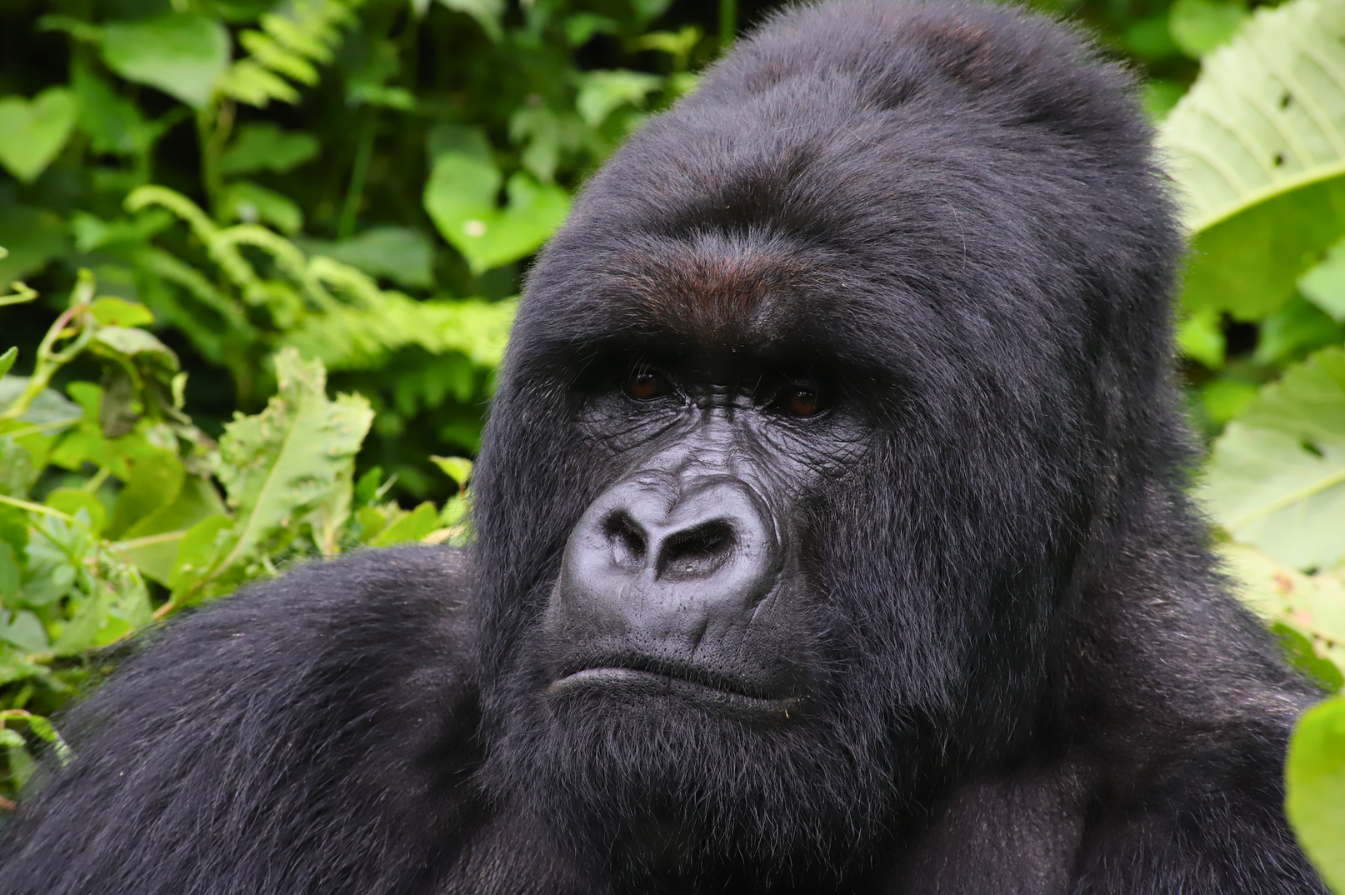
(Silverback Renzaho of the newly formed Kabirizi family, 2025. Photo by Virunga National Park)
These observations reinforce the understanding of family fissions as a natural phenomenon in mountain gorilla groups, especially those with a high density of adult males. Leadership competition, generational shifts, and developing social maturity often lead to the formation of new families – a pattern long documented in Virunga’s monitoring records.
Masibo’s decision to break away mirrors earlier moments in the family’s history; as male gorillas reach maturity and transition into silverbacks, they increasingly compete for influence and eventual control of their troops. A split will typically occur once a rising silverback is strong enough – both physically and in social standing – to establish and defend his own group, comprising mostly females and their infants, but often a few subordinate males that decide to follow them.
Current observations confirm the internal stability of both groups, each showing signs of adapting well to their new structures. With this recent development, the Mikeno sector is now home to 11 habituated gorilla families: Bageni, Kabirizi, Masibo, Mapuwa, Wilungula, Baraka, Rugendo, Humba, Nyakamwe, Lulengo and Munyaga.
As Virunga marks its centenary, events like the Kabirizi family split underline the complexity and importance of long-term monitoring projects. For 100 years, the Park has been home to long-term great ape monitoring efforts, allowing researchers to document changes in family lineages over time.
The transformation of the Kabirizi family – from its origins in the 1990s to its latest chapter in 2025 – reflects the continually evolving nature of the Park’s gorilla monitoring program, which adapts to the prevailing conditions in the Park, the resources available and the needs of the primates themselves. As new families emerge and established groups experience changes, Virunga continues to set the standard in mountain gorilla conservation in order that generations to come are granted the opportunity to behold these great apes in their natural habitat.
Your support helps safeguard the future of mountain gorillas in the Park.
Celebrate 100 years of Virunga with our commemorative anniversary book – every copy helps protect Africa’s oldest national park.
Shop Now
Indulge in our collection of artisan chocolates, crafted from the finest cacao grown in the fertile volcanic soils of the Virunga region.
Shop Now
Discover the beautiful handcrafted products made by the talented women artisans of Virunga’s Women Workshop.
Shop Now