
Virunga's Mountain Gorilla Families

Of the 11 mountain gorilla families that roam the Virunga Mountains, nine have been fully habituated, with the remaining two currently undergoing the process of habituation. Learn more about the gorilla families that your support helps the Park to monitor and protect.

The Bageni Family

Bageni became a silverback in 2010 and stayed with his father Kabirizi until January 27, 2013, when repeated confrontations led him to leave with 20 individuals — including his mother, Mapedo — to form his own troop.

The family has since grown into a large and dynamic group of Mount Mikeno, with its three silverbacks sometimes ranging separately across the territory. Today, with 60 members, Bageni’s remains the largest troop in the Park and in the Virunga Massif.


The Wilungula Family

The Wilungula family recently became accustomed to human presence and now counts 36 individuals, including five silverbacks. The group continues to grow through migration, most recently with the female Shabani, who migrated from the Kabirizi family after an interaction between the two troops.

Today, with 36 members, Wilungula stands as one of the growing families of Mount Mikeno.

The Kabirizi Family

Many members of the Kabirizi family originally came from the Zunguruka troop, which was habituated in Bukima in 1994. Between 1998 and 2012, the group grew to 36 members. After that, Kabirizi’s son, Bageni, broke away with 20 individuals to form his own troop.

Over the following decade, 16 births helped rebuild the family, though with seven silverbacks — the highest number in the Park — competition for leadership never fully eased. That came to a head in August 2025, when Kabirizi’s son, Masibo, challenged him and left with 12 members, including four silverbacks, confirming a lasting split. Kabirizi now leads a smaller troop of 12 members.

The Mapuwa Family

Silverback Mapuwa left his father Rugendo’s family in 1995 to live as a solitary male. After three years and several clashes with silverback Lulengo, he secured two females to form his own troop. Further clashes with the Kwitondo and Rugabo families in 1999 brought four more individuals, and the group grew steadily over the following decades.

In 2017, an ageing Mapuwa lost leadership to silverback Mvuyekure and later returned to the troop as a subordinate silverback, with the family reaching around 22 members by 2020. Today, the troop counts 28 individuals, with Mvuyekure and Wathaut sharing leadership.

The Rugendo Family

The Rugendo troop was among the first habituated in Jomba in 1984. Silverback Rugendo was killed by rebels in Bukima in 2001, and his son Senkwekwe took over as leader, only to be killed himself in 2007 alongside five others in an attack believed to be intended to intimidate Rangers.

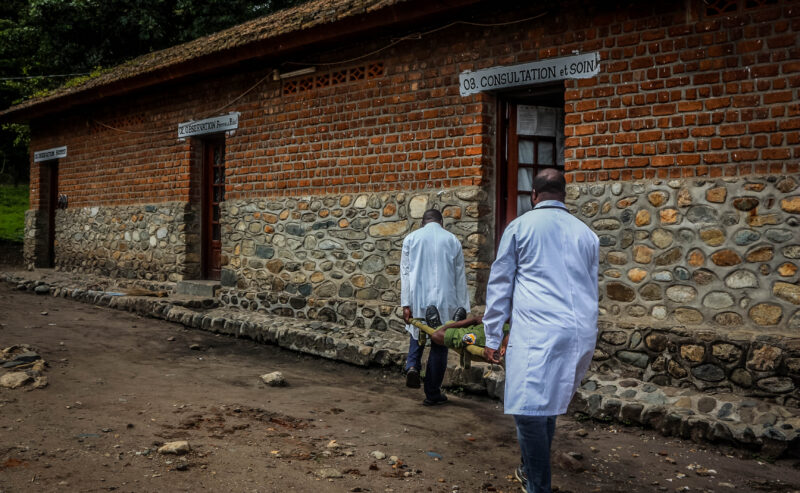
The five survivors continued without a leader until tracking resumed in 2008, when a formerly solitary silverback, Bukima, was found leading the group. The following year, Virunga opened the Senkwekwe Centre — the world’s only mountain gorilla sanctuary — for orphans and victims of poaching and conflict, named in memory of silverback Senkwekwe.

Following Bukima’s death in June 2024, silverback Gongomani took over as leader. Today, the Rugendo family counts 20 individuals.

The Humba Family

The Humba family formed in December 1998, when ongoing clashes with his father, Rugendo, split the troop, and Humba left with his brother Nyakamwe, who later became a silverback himself. The group grew steadily to 17 members over the next decade, before tensions between the two brothers led to another split in 2014, with Humba keeping six members and Nyakamwe departing with ten.

The family began to grow again in 2015, when the adult female Kakule joined silverback Humba after a confrontation with silverback Munyaga. Today, the family has grown to 21 members, with silverbacks Humba and Mahindure sharing leadership by dividing the females between them to keep the group stable.

The Nyakamwe Family

The Nyakamwe family formed in 2014, when silverback Nyakamwe — originally part of the Rugendo troop alongside his brother Humba since the 1998 split — broke away as a subordinate male after repeated confrontations between the two brothers, leaving Humba with six members and Nyakamwe with ten. The following year, a clash with Kabirizi brought the adult female Kabila into Nyakamwe’s troop.

Today, the family counts 18 members, though monitoring teams have noted the disappearance of the blackback Kanyangara, who may have gone solitary.

The Lulengo Family

The Lulengo family’s original leader was Rugabo, also known as Marcel, who was killed alongside two females in a 1994 poaching attack that also saw the young gorilla Mvuyekure kidnapped for sale in Uganda; the poachers were later arrested and jailed.

Lulengo took over leadership of the twelve surviving members, and the troop lost ground in 1998 caused several gorillas to leave the troop, then regaining a member in 2014 when the female Bagambe joined following a clash with silverback Rugendo.

Today, the family counts 16 individuals, still led by silverback Lulengo — born on 6th May 1984 and one of the oldest dominant males in the Mikeno sector.

The Munyaga Family

Before 1998, silverback Munyaga was unhabituated and not regularly tracked, known mainly through interactions with the Buhanga family, some of whose members — including brothers Kasole and Mawazo, now silverbacks — joined him.

Habituation later revealed Kadogo, the only known bald gorilla in the Mikeno sector, among its members. The troop shrank from 12 to 6 members between 1998 and 2002 due to repeated family clashes, and Munyaga himself vanished between 2007 and 2008 while rebels occupied his range and blocked Ranger monitoring, during which Mawazo became the dominant silverback.

Today, the family counts 14 individuals, one of the smallest troops in the Mikeno sector despite having four silverbacks. Kasole and Mawazo now lead jointly, following their past rivalry.

The Baraka Family

Like the Wilungula family, Baraka’s troop recently became accustomed to human presence and was found ranging at high altitudes, up to 3,000 metres. In 2026, the family welcomed a rare set of twins, though one of them hasn’t survived.

Today, the family counts 18 individuals, and field teams continue to keep a close eye on the other twin.

The Masibo Family

The Masibo family formed in October 2025, when silverback Masibo split from the Kabirizi family and left with 13 individuals, including one young female who had migrated from Nyakamwe.

In March 2026, the family recorded its first birth since forming, when the female Serundori gave birth to a male infant. Today, the family counts 15 individuals.

Our Partners

Frequent Asked Questions

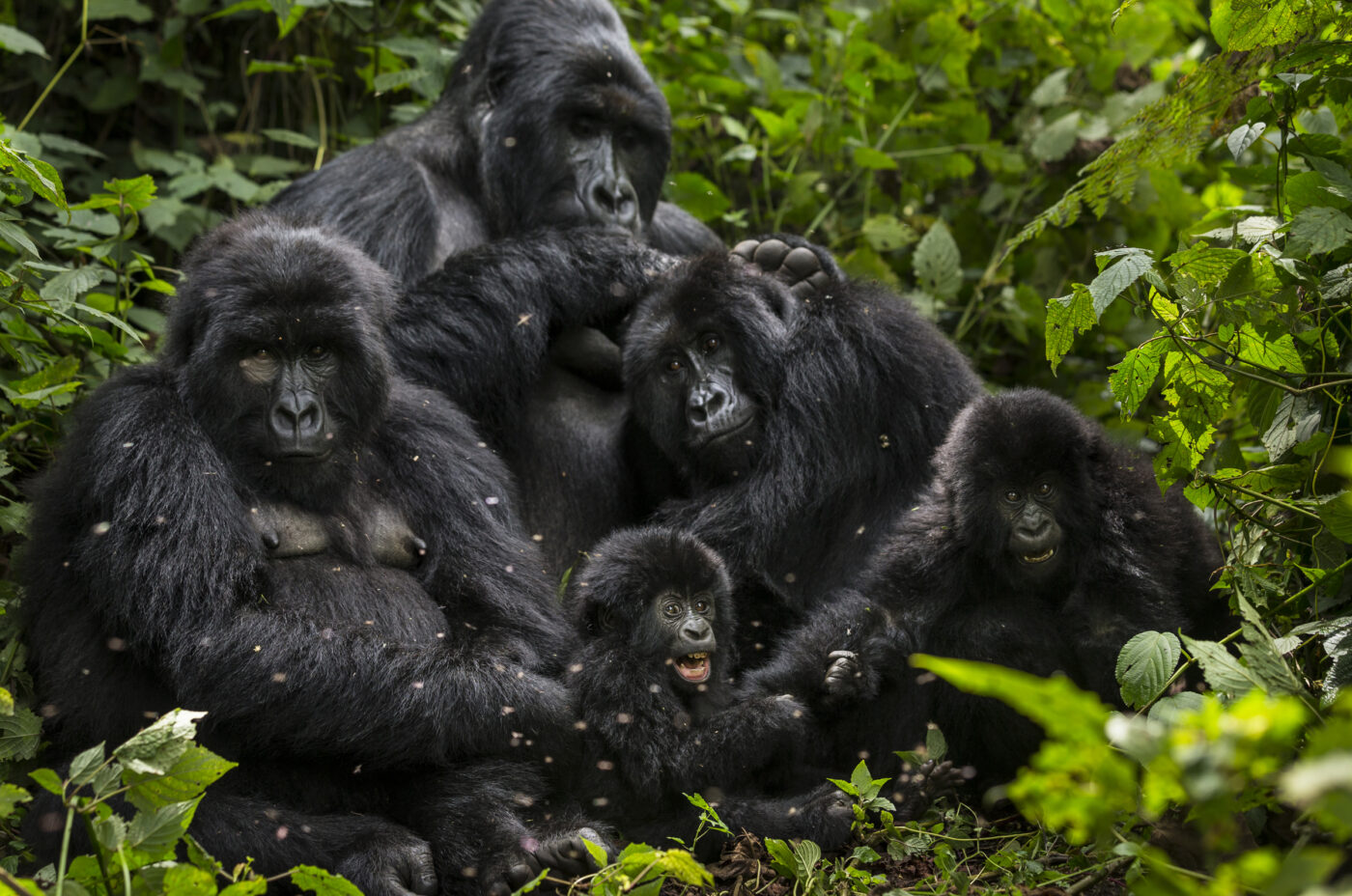
A. Mountain gorillas live in family units (troops) led by a dominant male silverback. Other males in the troop are usually subordinate, and the silverback protects and guides the group.

A. The silverback leads the troop, defends it, makes decisions about movement, retains mating rights, and protects family members.

A. Yes, mature females sometimes migrate between families, which helps reduce inbreeding and improve reproductive opportunities.

A. They use vocalizations, chest beats, body postures, gestures, and visual signals to communicate. Silverbacks, in particular, use displays to establish and maintain their status.

A. The incoming silverback may challenge or displace the prior leader, potentially causing conflict. After the takeover, he assumes leadership, defends the rights of females, and may reorganize troop dynamics.