

Support the Emergency Response >
Rescued as an orphan, reintroduced gorilla gives birth in the wild for the first time
Orphaned and saved from the illegal wildlife trade at 18 months old, Lulingu was raised at GRACE sanctuary before being reintroduced into the wild at Virunga National Park, where she has now given birth.

(Lulingu and her newborn in May 2026, picture taken by GRACE Gorillas)
One of the first-ever eastern lowland gorillas to be successfully returned to the wild gave birth on May 21 in Virunga National Park, marking a major milestone for an ambitious effort to reinforce the small, isolated and critically endangered population on Mt. Tshiaberimu.
The mother, Lulingu, was one of four female gorillas moved at the end of 2024 from the GRACE sanctuary in Kasugho to Virunga’s Mt. Tshiaberimu. Her baby was fathered by Mwasa, a wild silverback living on the mountain, a sign that Lulingu had successfully integrated into the wild population. The release of the four females, all of whom have joined Mwasa’s family group, was the culmination of a more than five-year rewilding process led by GRACE, Virunga National Park and local communities, with support from Gorilla Doctors and Re:wild.

(Lulingu and her newborn in August 2026, picture taken by GRACE Gorillas)
The Congolese Nature Authority (ICCN) and Gorilla Doctors rescued Lulingu at just 18 months old after she was taken from her family and sold into the illegal wildlife trade. She was the youngest orphaned gorilla ever brought to GRACE, the only sanctuary in the world for rescued eastern lowland gorillas.

(Young Lulingu after her rescue at GRACE sanctuary, picture taken by GRACE Gorillas)
GRACE provided Lulingu with around-the-clock care before another gorilla, Pinga, took over as her surrogate mother and welcomed her into the larger gorilla family at the sanctuary That family included Mapendo, Ndjingala and Isangi, the other three females who would eventually return to the wild alongside Lulingu.
“I have been with GRACE since the beginning. Lulingu’s journey reflects everything we hoped possible,” said Jackson Kabuyaya Mbeke, DR Congo country director for GRACE. “I watched her arrive as our youngest orphan at 18 months old, grow up in a surrogate gorilla family, return to the wild, and now become a mother for the first time. This milestone is the result of years of hard work—day and night. I am deeply proud of our team and grateful to everyone involved.”
The birth is also an important step toward the conservation project’s central goals: providing a critical genetic boost to the small and isolated gorilla population on Mt. Tshiaberimu. A population viability analysis found that without the addition of reproductive females, this gorilla population faced a high risk of extinction within 50 years.
Isangi, Lulingu, Mapendo and Ndjingala were rescued from the illegal wildlife trade as infants and were the first gorillas from the GRACE sanctuary to be rewilded at Virunga National Park. The four females were selected based on their behavior, reproductive health and overall health, following best practice guidelines developed by the International Union for the Conservation of Nature (IUCN) for the reintroduction of great apes.
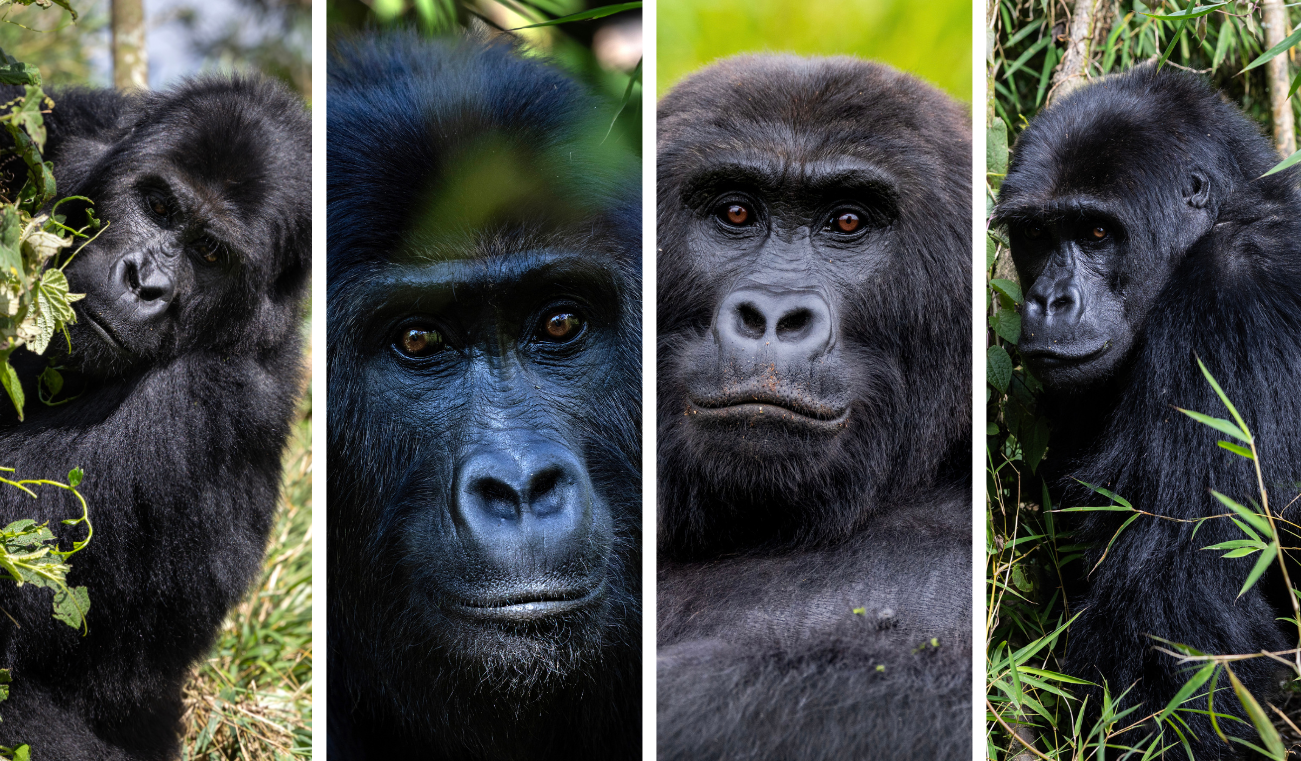
(From left to right: Isangi, Lulingu, Mapendo, and Ndjingala. Photos of Isangi, Lulingu, and Ndjingala by Brent Stirton / Getty Images. Photo of Mapendo by Bobby Neptune)
Virunga’s gorilla monitoring team has been tracking the family group closely since the four females were released into the wild in December 2024 and has observed them mating with Mwasa. In addition to monitoring the gorillas’ feeding behavior, the team has been collecting urine samples non-invasively from leaves and using human pregnancy tests to detect elevated levels of hormones associated with pregnancy.
“None of the four females have required veterinary treatment for illness or injury since being rewilded–the outcome we always hope for,” said Dr. Cedric Kibengo, a field veterinarian with Gorilla Doctors who has monitored the health of all the eastern lowland gorillas at Mt. Tshiaberimu since 2024. “With the arrival of Lulingu’s infant, we now have one more ‘patient’ under our care, and both mother and infant are healthy and doing well.”
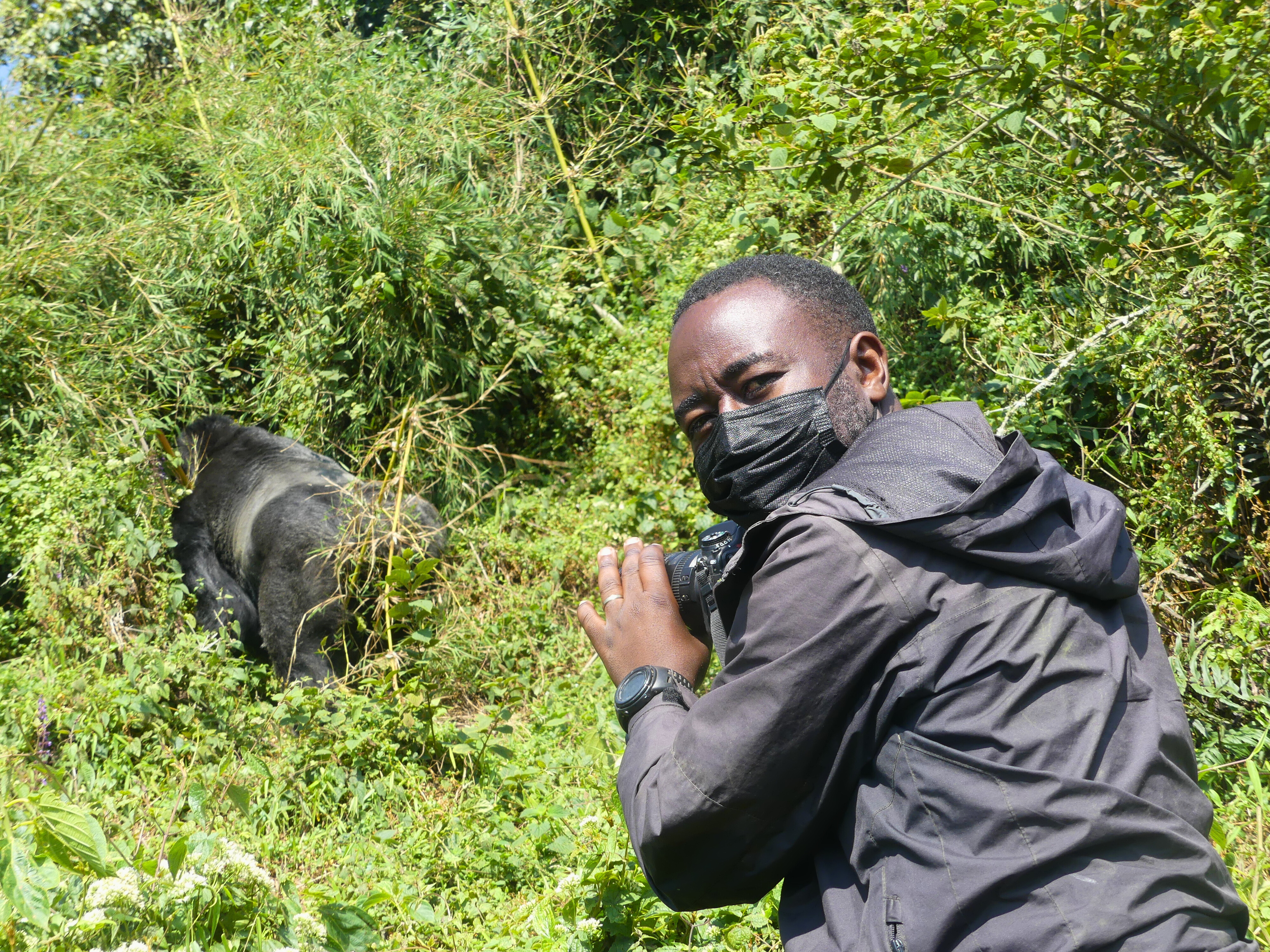
(Dr. Cedric of Gorilla Doctors with silverback Mwasa, picture taken by Gorilla Doctors)
Lulingu has already navigated a series of firsts since returning to the wild, adapting to a new habitat, diet, and social environment. These successes have made the monitoring team optimistic as she navigates another first: raising an infant.
Researchers have not studied eastern lowland gorilla mortality rates in the wild, but the mortality rate for closely related mountain gorilla infants is about 35%. Although all four females interacted with young gorillas while living at GRACE, none has raised an infant before. The monitoring team hopes the gorillas will learn with and from one other as they begin raising young in the wild.
“Lulingu is doing a great job taking care of the baby and is central to the family group,” said Benoit Ishaba, head of gorilla monitoring on Mt. Tshiaberimu and a Ranger at Virunga National Park. “We have seen her nursing, cradling, and playing with the baby. The other young gorilla in her group has shown interest in the baby, and Lulingu has been very patient with him.”
Lulingu’s new infant is also giving scientists and conservationists a rare opportunity to observe a rewilded eastern lowland gorilla raising her first infant and to better understand how the reintroduced females respond to and interact with a new baby.
Gorilla pregnancies typically last between eight and nine months. At least one of the other rewilded females may also be pregnant and could give birth in the coming weeks or months.
For press requests, please contact [email protected]


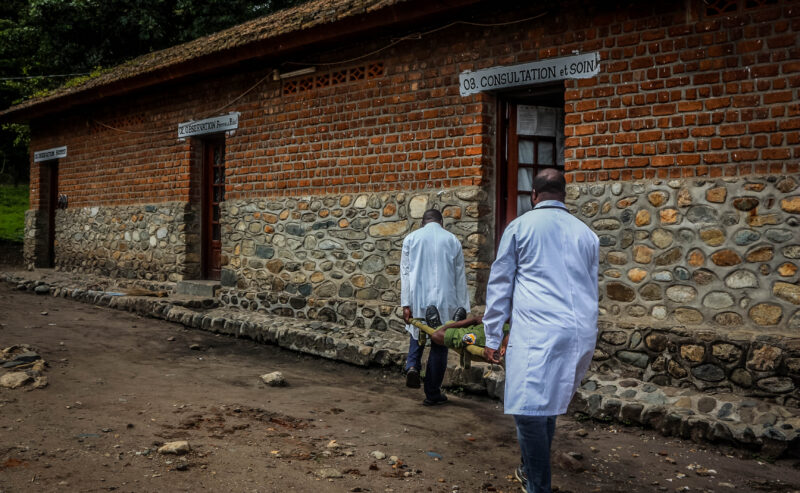
Your donor-advised fund is already set aside for good. Put it to work for Virunga’s Ebola response.
Indulge in our collection of artisan chocolates, crafted from the finest cacao grown in the fertile volcanic soils of the Virunga region.
Shop Now
Celebrate 100 years of Virunga with our commemorative anniversary book. Every copy helps protect Africa’s oldest national park.
Shop Now
Twelve months of Virunga’s gorilla families, photographed in the Park and available as a monthly calendar or family organiser.
Shop Now