


Support the Emergency Response >
Agriculture and conservation: Virunga increases its dialogue with local communities
From Kasundi to Kitaragha, Virunga National Park has been improving its dialogue with the coffee farmers of COOPADE. Ten years’ worth of experience demonstrate that productive, profitable agriculture is possible without infringing on protected areas.
On the 27th and 28th of August, Virunga National Park met with the coffee farmers of the Rural Development Cooperative (COOPADE/COOP-CA) in Kasundi, near Burusi and then in Kitaragha in the Bashu district. These meetings were put in place to improve the dialogue with local farmers and to promote agricultural practices that are compatible with conservation.
Since 2014, COOPADE was among the first cooperatives that collaborated with the Virunga Foundation to develop its coffee offering. Today, it has over 4000 members primarily based in the Graben between Beni and Lubero. With an average annual production of 800 tonnes and an export capacity of around 300 tonnes, it demonstrates the potential that a structured and sustainable agricultural development can have in the region.
Over the years, the support that the Virunga Foundation has provided to the producers has contributed towards improving agricultural practices, increasing yields, adding value to producers’ labour and gaining access to larger markets. The collaboration with COOPADE constitutes one of the most successful examples of a sustainable partnership between Virunga and local producers.
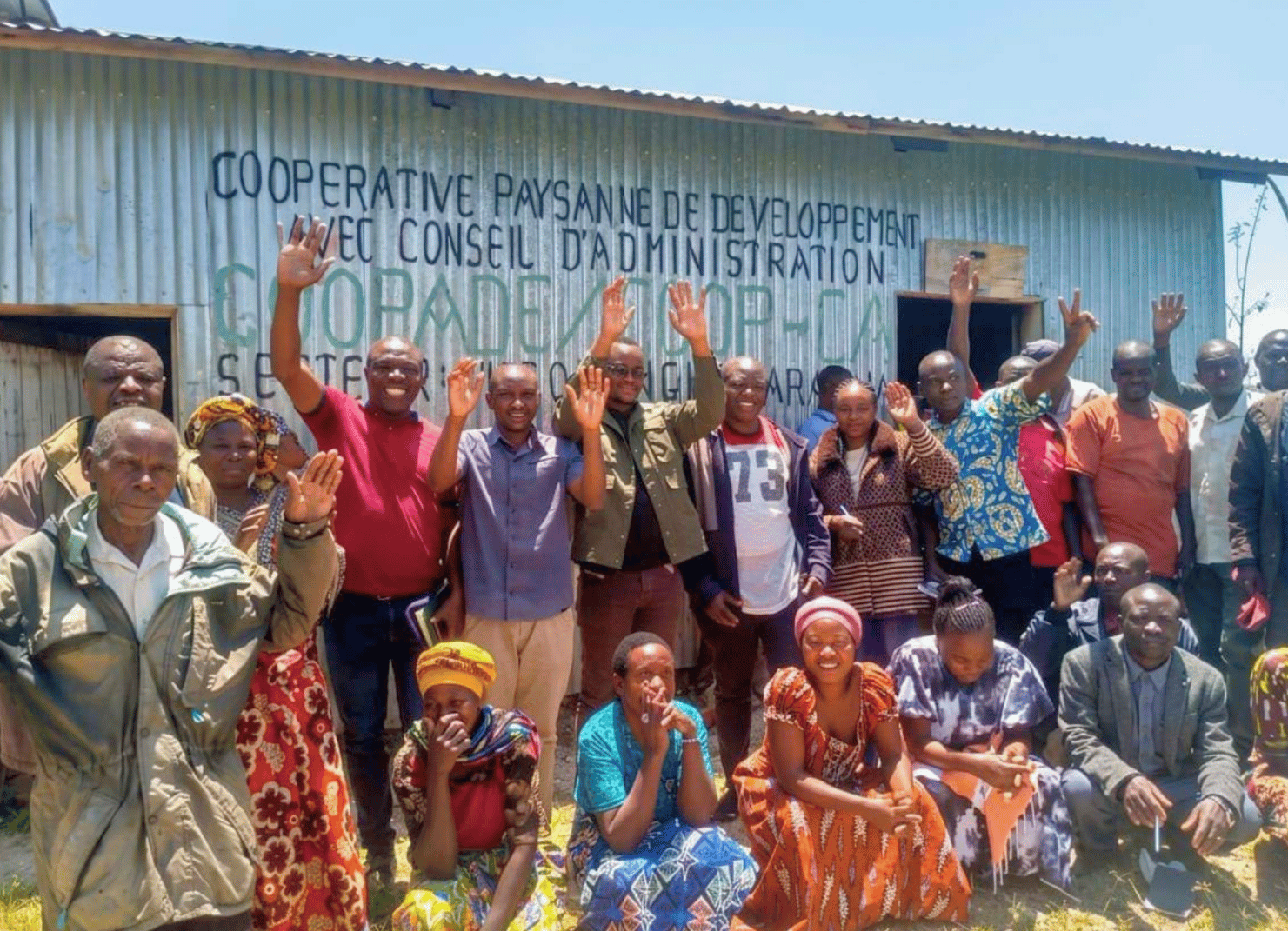
This experience is also concrete proof that it is possible to farm productively without destroying the Park. By adopting good practices and developing sustainable, organic coffee plantations outside of protected areas, farmers can improve their yields and revenues whilst contributing to the protection of the environment.
The conversations with the producers also brought up the challenges of cohabiting with wildlife, particularly the damage caused by elephants. Virunga encouraged the farmers to favour sustainable solutions to protect their fields. In Rwenzori, the electric fence installed along the Park boundary is already helping to reduce losses for farmers in that area.
Beyond agricultural practices, the dialogue also had a wider goal: to make COOPADE producers ambassadors for a new way of thinking about the relationship between agriculture and conservation. Using their own experiences, they can prove to other local farmers that it is possible to increase production and revenue without extending fields into the Park.
In a region where misunderstandings between farmers and protected area managers can sometimes lead to tension, COOPADE’s experiences demonstrates a collaborative model to follow. It reminds us that with dialogue, support and tailored practices, agriculture development and conservation can not only coexist, but also improve each other.