


Explore the Bageni Family Tree >
Lions are the only big cats that habitually live in social groups. Only males have a mane, which tends to get darker as they age. Each individual lion has a unique whisker pattern, similar to a human fingerprint. A lion’s roar can be heard up to 8 kilometres away.
The African lion (Panthera leo) is one of the largest felines on Earth. Unlike most other big cats, they lead very intricate social lives. Lions live in groups called prides, which are usually composed of numerous lionesses, lion cubs and a few males. These prides can number up to 30 or 40 members.
Lionesses generally remain within their original pride and are often related. Young males on the other hand will leave their pride when they reach maturity and will then either live alone or form coalitions with other males. Lionesses play an essential role in hunting for prey and raising the pride’s cubs, whilst the males focus on the protection of the pride and its territory.
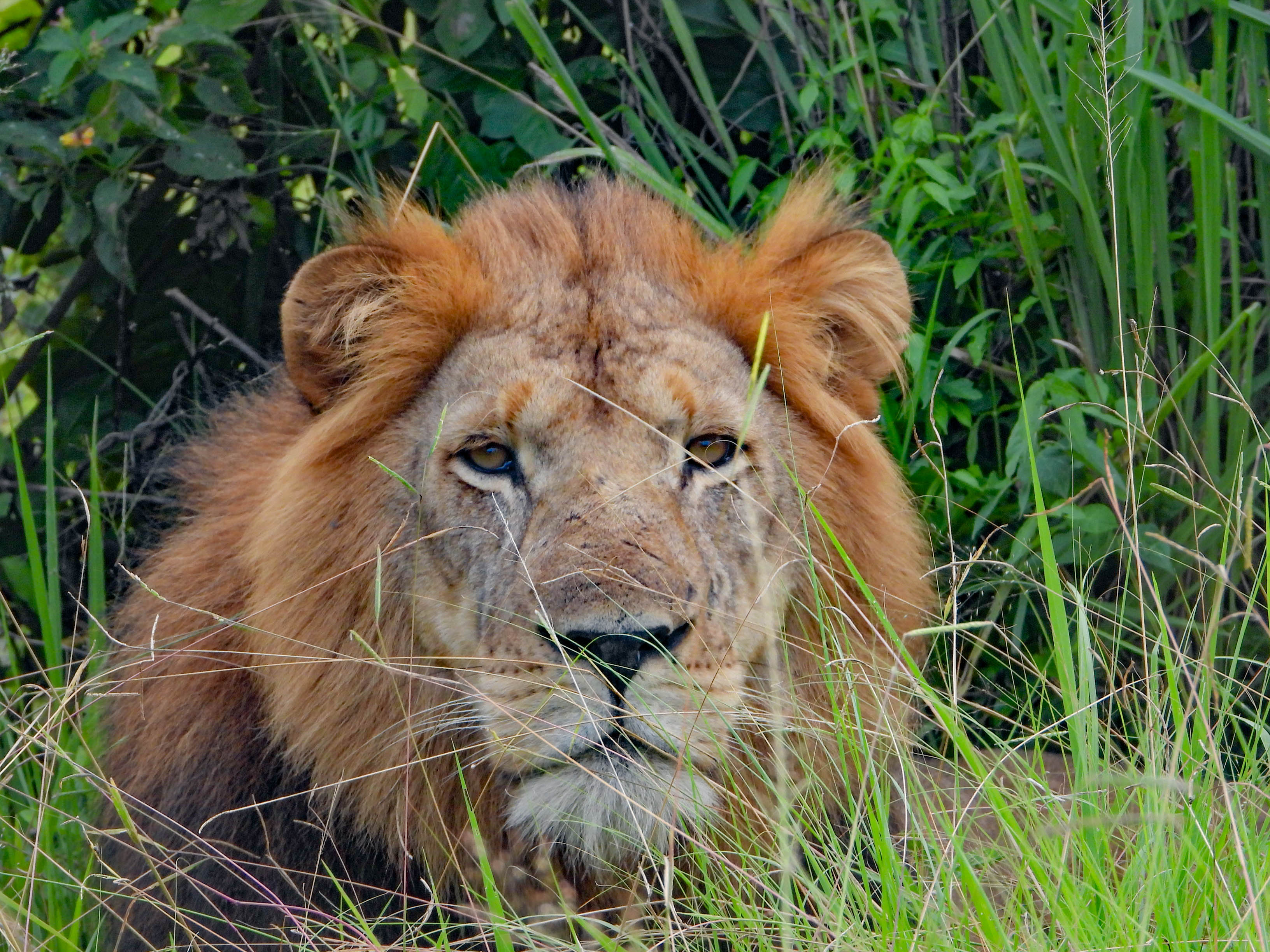
The bond between lionesses is particularly notable when it comes to communal nursing of the pride’s cubs. A lioness will indiscriminately nurse another’s cubs. When multiple lionesses go hunting for prey at night, one female can therefore remain with the cubs to ensure their safeguard and feeding.
Lions are mainly active during the cooler times of day and at night. After hunting and feeding, they can then rest for several days to conserve energy. Their territory boundaries are marked with urine and through nighttime roars, which can be heard from kilometres away.
Following a gestation period of around 110 days, a lioness will usually give birth to multiple cubs. These cubs will then benefit from the protection of the pride. This social arrangement increases their odds of survival in an environment with numerous threats.
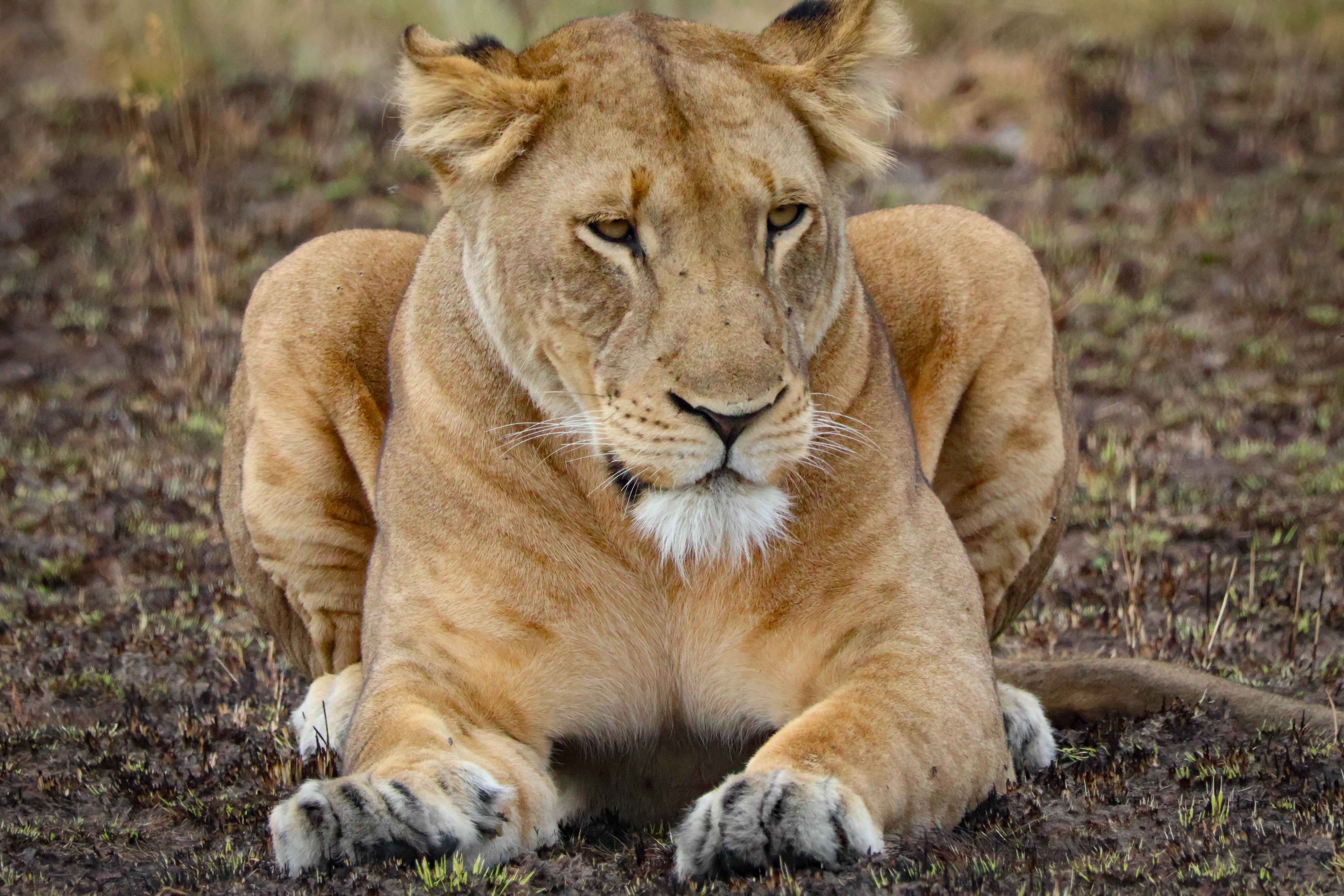
Until the 1990s, around 150 lions lived in Virunga National Park. However, war, poaching, conflicts with local communities and habitat degradation greatly reduced these numbers. A resident population did somehow survive this period in the Park’s savanna.
Since 2022, the lion restoration project has been aiming to get to know this population better, whilst reinforcing its protection and encouraging its growth. In the cross-border Ishasha Valley —which is shared with Queen Elizabeth National Park— lions are at risk of poisoning, trapping, a reduction in prey animals and habitat loss.
Virunga has been tracking the prides thanks to GPS collars, camera traps, patrols and fieldwork, in collaboration with the Uganda Wildlife Authority. Protecting the lion is vital for the protection of the savanna and the equilibrium of an entire ecosystem.
Find out how they live, where they roam in the Park, and how they are protected.